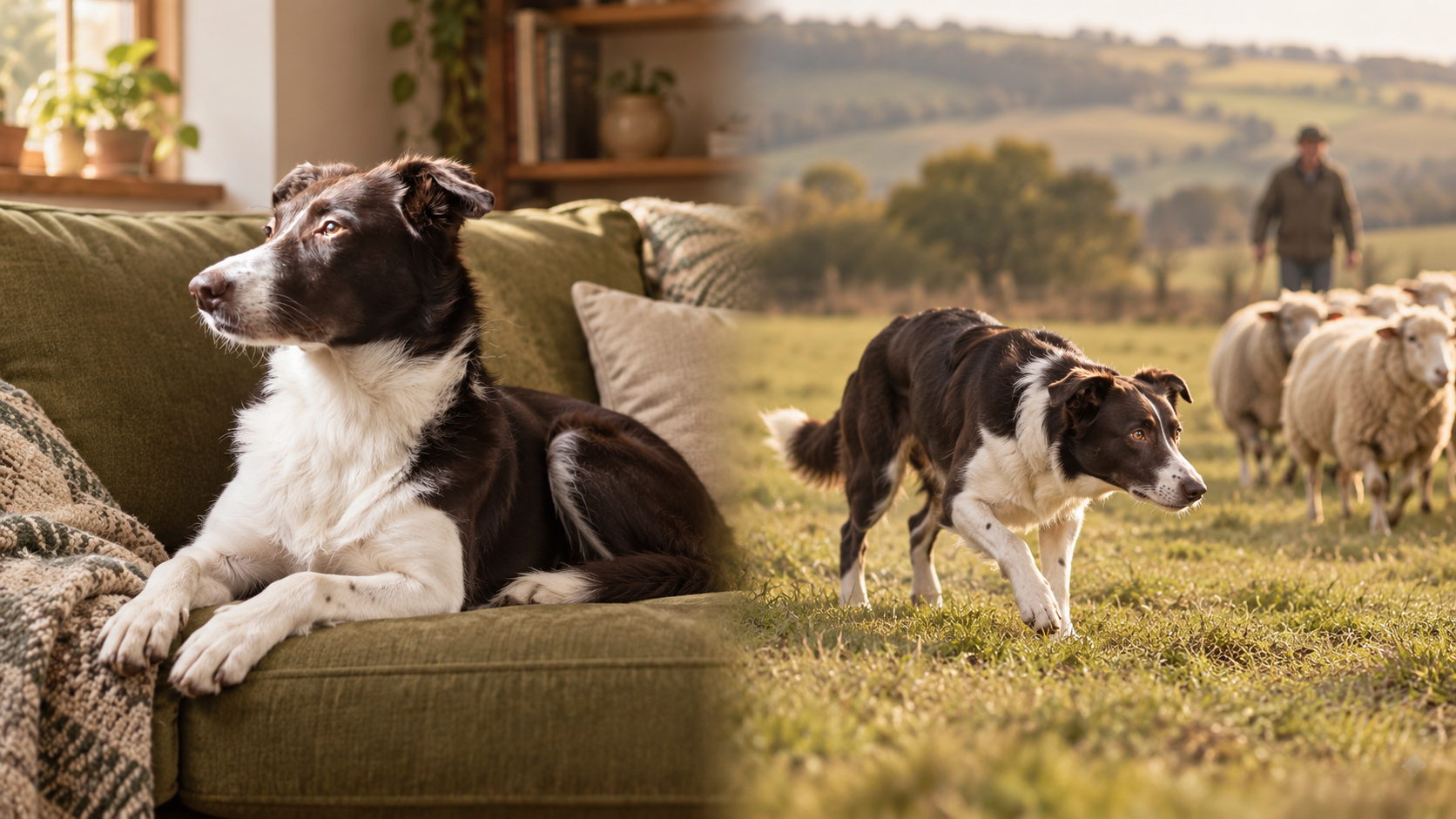
There was a time when dogs did not sleep on our sofas, wear little coats or have personalised bowls bearing their names.
We do not know exactly when our shared story began. But we know that, thousands of years ago, the paths of humans and the ancestors of dogs became intertwined, giving rise to one of the most extraordinary relationships between two different species.
Over the millennia, that relationship would become collaboration, protection, companionship and affection.
We selected dogs able to pursue prey, protect flocks, guard homes and work alongside us. We rewarded certain traits, encouraged some behaviours and discouraged others.
In essence, we spent thousands of years shaping dogs so they could live in our world.
We have not stopped shaping dogs. The demands we place on them have changed and multiplied: sometimes an appearance we like, sometimes a highly specialised performance.
Consider the English bulldog. Selecting extreme physical features, such as a very short muzzle and pronounced skin folds, raises a concrete welfare concern. A 2022 VetCompass study found that English bulldogs in its UK sample had increased predispositions to numerous disorders, including breathing problems associated with brachycephalic conformation and skin-fold dermatitis. This does not mean every individual has the same problems; it means our aesthetic preferences can come at a cost to the animal.
At the other end are Belgian Malinois employed by the military, including in combat operations: dogs selected and trained for specialised tasks such as patrolling and detecting explosives. These deployments show how sophisticated cooperation can be, but do not make every Malinois automatically suited to those tasks: the individual dog, selection and training matter.
In my view, the common thread is not that companion dogs and military dogs are equivalent. It is that we continue to decide which bodies, abilities and behaviours we want. Whether for an aesthetic preference or an operational role, the question should remain the same: how much room do we leave for the dog’s health and needs, even when they conflict with what we want from them?
Then something changed. Not for every dog, and not at the same time: work and companionship still coexist. But for many, their place in our everyday lives changed.
The sheepdog moved into our flats. The hunting dog began sleeping at the foot of the bed. The property guardian became a member of the family.
And as their role changed, so did our language.
We speak of loyalty, unconditional love, friendship and family. We see dogs as one of our most sincere emotional bonds.
But there is a contradiction we rarely pause to consider.
We have turned an animal selected to cooperate with us into a companion we expect, above all, to fit into our lives.
They must stay quiet while we work, not bark when we are tired, not pull on the lead when we are in a hurry, socialise when we want them to and stay alone when we need to go out.
And when they cannot meet those expectations?
We often call them disobedient, dominant, stubborn or difficult.
But are we sure the dog is always the problem?
This is not about denying the importance of training, boundaries or safety. It is about asking how much room we leave for the needs and nature of the animal we have chosen to share our lives with.
Perhaps the point is not how much dogs have become like us, but how willing we are to recognise that they remain profoundly different.
We have spent millennia teaching dogs to understand us. But have we ever stopped for five minutes to try to understand them?